

Buyer guide with Colleen Olivas
How to Choose a CalHFA-Approved Lender in the Inland Empire
By Colleen Olivas, NMLS #379721, The Brandon Drew Group, a division of New American Funding Last reviewed October 2026
Quick answer
A CalHFA-approved lender is a lender that the California Housing Finance Agency (CalHFA) has approved to offer its loans. CalHFA programs are only available through one. To choose between them, ask how many CalHFA loans they close, who handles your file, how they reserve program funds, and how they handle homebuyer education.

Key points
- "CalHFA-approved lender" is CalHFA's own term. CalHFA's home loan and assistance programs are offered only through lenders it has approved.
- Approval means a lender is allowed to offer the programs. It does not tell you how experienced that lender is, how they will treat your file, or how they will communicate with you.
- You can look up approved lenders on CalHFA's own lender search. Check there, and check the lender's license on NMLS Consumer Access too.
- Ask every lender the same questions: how many CalHFA loans they close, who handles your file, how they reserve funds, how they handle homebuyer education, and how they talk about timelines.
- A good lender answers in plain words and in writing. Be careful with any lender who promises approval, pushes you to decide fast, or will not explain a cost.
On this page (9 sections)
Why the lender you pick matters with CalHFA
CalHFA's income limit for San Bernardino County is $210,000 for its programs other than Dream For All, effective June 30, 2026 (CalHFA income limits table). If your household is under that limit, the next question is which lender to call. CalHFA's programs are not sold by every lender. They are available only through lenders CalHFA has approved, and that shrinks the list.
A CalHFA file also has more moving parts than many standard purchases. There is a first mortgage, often a second loan that helps with cash up front, a required homebuyer class, and program rules about who must live in the home. Each piece has its own steps. Two approved lenders can give you very different experiences. One may work these files every week. Another may work them a few times a year.
If you are a first-time buyer, or comparing programs for the first time, you may have heard of Dream For All and not be sure what is open now. It is closed to new applications. The 2026 portal closed March 16, 2026 (checked October 2026).
This guide covers what "CalHFA-approved" means, how to find an approved lender, the questions to ask, and the warning signs. We keep the language plain and explain each mortgage word the first time. We are a mortgage branch, so we are not neutral. Use these questions on us, too.
What "CalHFA-approved lender" means
A CalHFA-approved lender is a mortgage lender that CalHFA has approved to originate, or start, CalHFA loans. CalHFA is the California Housing Finance Agency, a state agency that helps people buy homes. Its programs are offered through approved lenders. CalHFA says it "only works with approved, skilled loan officers who are familiar with CalHFA's loan programs."
A few things people often get wrong:
"Approved" is not the same as "recommended." CalHFA approves lenders to offer its programs. It does not rank them for you or tell you which will treat you better. That part is up to you.
Mortgage brokers have a different path. A broker does not lend its own money. According to CalHFA's handbook, a broker works through a CalHFA-approved wholesale lender. If you are talking to a broker, ask which approved lender will actually handle your CalHFA loan.
Approval does not mean you qualify. Even with an approved lender, you still must meet the program's rules. CalHFA's MyHome Assistance, for example, is for first-time buyers of an owner-occupied home in California. In CalHFA's description, first-time buyer means you have not owned a principal residence in the past three years. Every borrower on the loan must be a first-time buyer and must live in the home, moving in within 60 days of closing. The program has income limits that vary by county, and CalHFA updates them during the year. Read our guide to CalHFA MyHome Assistance for the details.
Approval does not mean the programs are open. Some programs open and close. Dream For All is an example. It is closed to new applications; the 2026 portal closed March 16, 2026 (checked October 2026). CalHFA's May 20, 2026 note says the next round of vouchers has been released and tells people who already applied to check the portal. That is not a new application round. Our guide CalHFA Dream For All is closed. What are my options now? explains what you can do. Funds for any assistance are limited and subject to availability.
The word "approved" does not describe a person. CalHFA also publishes a "Find a Loan Officer" list. CalHFA notes that branches "may or may not have loan officers on site that are trained to process CalHFA loans." A company can be approved while the individual you talk to has done many files or few. Ask about the person, not just the company.
How to find a CalHFA-approved lender
You have three good ways to build a short list.
1. Use CalHFA's own lender search
CalHFA publishes an approved lender search on its website. This is the first place to look, because it comes from the agency and not from an advertiser.
- Approved lender search (search by county, city or lender): https://www.calhfa.ca.gov/apps/approvedlenders
- CalHFA's "Find a Loan Officer" list: https://calhfa.ca.gov/homebuyer/lenders.htm
- CalHFA's phone line: 877-922-5432
Search by your area and look at more than one name. Write down each lender's company name and the loan officer's name. Then look up each one on NMLS Consumer Access (www.nmlsconsumeraccess.org). NMLS stands for the Nationwide Multistate Licensing System and Registry. Every licensed loan officer and lender has a number there, and the page shows their license status and the company they work for.
To reach our branch, call 909.944.8800. You can check New American Funding (NMLS #6606) and each of us on NMLS Consumer Access. Our office is on CalHFA's approved-lender list as New American Funding, LLC, 8463 Haven Avenue #B, Rancho Cucamonga.
2. Ask the people who have been through it
Ask friends, family, coworkers or your real estate agent who they used. Ask what the lender did well and what they would change. A recommendation is not proof, so still ask the questions below. But a recommendation tells you where to start.
Your real estate agent works with many lenders and sees how they communicate. Ask your agent which lenders return calls and which send documents on time. Then compare the answers with the lender's own.
3. Check it against CalHFA's own program page
When you read about a program, check it against CalHFA's own program page on calhfa.ca.gov. The program page tells you how it works and who offers it. If a lender tells you something that does not match it, ask them to show you where it says so. For further reading, see our guide to CalPLUS with ZIP.
The questions to ask any lender
You can bring this list to any lender, including us. A good lender answers each one in plain words and will put the answer in writing if you ask. This table shows the question, why it matters, and what a clear answer sounds like.
| What to ask | Why it matters | What a clear answer sounds like |
|---|---|---|
| Are you a CalHFA-approved lender, and how can I confirm it? | Programs are only available through an approved lender | They point you to CalHFA's lender search and their NMLS number, and do not mind if you check |
| How many CalHFA loans does your team close? | Experience shows in the details: deadlines, forms and program rules | A real number or range and a plain statement of how often they do these files |
| Who will handle my file, and will it be the same person throughout? | Handoffs are where questions get lost | A named person, and a clear answer on who covers when they are out |
| How do you reserve CalHFA funds, and when? | Funds are limited, and CalHFA says reservations may be made after a purchase contract has been signed between buyer and seller | They explain when the reservation happens and what you must have ready |
| How do you handle homebuyer education? | CalHFA's MyHome requires it, and it must be done in time | They tell you which providers CalHFA accepts and when to take the class |
| What will be my first mortgage, and how does it compare with other options? | The assistance is paired with a specific first mortgage; the whole loan matters | They show the first mortgage side by side with other options, on paper |
| What are the costs and fees, in writing? | You should know what you will be asked to pay before you commit | A written estimate and a clear answer for each line they can explain |
| How do you talk about timelines? | No honest lender can promise a closing date | They describe the steps and what could slow them, and they do not promise a date |
| How will you keep me updated? | Good communication keeps a file moving | A clear plan: how often, by what method, and who to call |
| What happens if something changes in my file? | Job changes, new debt and appraisal issues happen | They explain what to tell them and when, and do not just say "don't worry" |
Each question, one at a time
"Are you CalHFA-approved, and how can I confirm?"
Start here. The answer should be quick and easy to check. You can look up the company on CalHFA's lender search and the licensed people on NMLS Consumer Access. A lender who is proud of their approval will be glad to point you there.
"How many CalHFA loans does your team close?"
Experience matters, but the number is only the start. Ask a follow-up: "Who on your team works these files day to day?" A company's total may not reflect the person you talk to. You want to know about your team.
If a lender gives you a number, ask what period it covers. A number without a period is hard to compare.
"Who handles my file?"
On a CalHFA purchase, several people may touch your file, such as a loan officer, a processor and an underwriter. Who does what varies by lender. At our branch, Colleen or your loan officer talks with you, the loan officer takes your application, and our office staff review it. Underwriting, the appraisal, the loan documents and funding are New American Funding's, and our team runs and coordinates each step in NAF's loan system. Ask who your main contact is. Ask who covers if that person is away. And ask whether you will work with the same people from your first call to closing.
Loan officers and lenders differ here. Some separate the sales person from the person who works the file. That can work well. It can also mean you explain things twice. Neither is wrong. What matters is that you know the setup before you begin.
"How do you reserve funds?"
CalHFA programs have funding that is limited and subject to availability. Your lender reserves, or sets aside, program funds for your loan through CalHFA's Mortgage Access System. According to CalHFA, reservations may be made after a sales contract has been signed between the buyer and seller, and the lender can lock or float the rate at reservation. Reservations last for a set period, so ask your lender how long yours lasts. Ask your lender:
- When do you reserve funds for a buyer?
- What do you need from me before you reserve?
- What happens if the reservation runs out before closing?
You are not looking for a trick. You are looking for a lender who has a clear process and can explain it.
"How do you handle homebuyer education?"
CalHFA's MyHome Assistance requires homebuyer education for one occupying first-time borrower on the loan. Options include CalHFA's online course (called eHome) or a class through NeighborWorks or a HUD-approved counseling agency, in person or virtual.
Ask your lender when to take the class, which providers they accept, and how your certificate gets to them. A lender who has this routine will answer in one breath. A lender who has to look it up may be newer to these files. That is worth knowing.
"How do you talk about timelines?"
No lender controls the whole timeline. Your documents, the home, the appraisal, the seller, the title company and the program all play a part. CalHFA files add program steps. So a lender who says "we will close in X days, guaranteed" is promising something outside their control.
A good answer sounds like this: "Here are the steps. Here is where files usually slow down. Here is what we can do to keep yours moving." Ask for the steps in order. Then ask what you can do to help at each step. That is the answer you can use.
Step by step: from first call to a lender you trust
- 1Write down what you want to know. Use the table above as your list. Add your own questions.
- 2Build a short list of two or three lenders. Use CalHFA's lender search, your agent's suggestions and recommendations from people you trust.
- 3Check licenses. Look up each lender and loan officer on NMLS Consumer Access.
- 4Make a first call to each. Do not send documents yet. Ask the questions and listen for plain answers.
- 5Ask for the answers in writing. A short email is enough. Notice who answers clearly and who avoids the question.
- 6Compare the whole loan, not only the assistance. The assistance is one part. The first mortgage that comes with it sets much of the long-term cost. Ask each lender to show you both. See pre-approval vs pre-qualification for what to expect from a first review.
- 7Choose the person as well as the company. You will talk to this person often. Pick someone who is patient with your questions.
- 8Then send your documents. Once you choose, respond fast to requests. Late paperwork is a common cause of delay.
Red flags to watch for
None of these proves a lender is wrong for you. Each is a reason to slow down and ask more.
A promise of approval. No one can promise you will be approved before your income, credit, assets and the property have been reviewed. The Consumer Financial Protection Bureau (CFPB) says prequalification and preapproval letters "are not guaranteed loan offers." Its loan options page says lenders must document and verify your income, employment, assets, debts and credit history.
A promise of a closing date. For the reasons above, a guaranteed date is not something a lender controls.
Pressure to decide today. Real programs have deadlines, but the pressure should come from the calendar, not from a person. If you hear "you must sign right now," ask what exactly expires, and ask them to show you.
Unclear answers about costs. If you ask what you will pay and get a vague reply, ask for it in writing. Ask for it in writing before you go forward.
Only one program on the table. A lender who shows you one option and does not explain the others may be limited in what they offer. Ask: "What else did you look at for me, and why did you rule it out?"
No plain answer on whether assistance is a loan. Some assistance is a loan you repay later. CalHFA's MyHome, for example, is a deferred-payment second loan that comes due at the earliest of a transfer of title or sale, a payoff or refinance of the first mortgage, or a recorded Notice of Default (unless rescinded). CalHFA also says it requires subordinate loans to be paid in full if the first mortgage is refinanced. A lender should say this clearly on the first call.
Hard to reach, slow to reply. How a lender treats you before you are a client is a preview of how they will treat you during the file. A lender who is slow to return a call before you apply may be slow after.
Asking you to hide or move money to "make it work." Never agree to this. Lenders need to see where your money came from. If you are not sure, ask the lender what is allowed before you move anything.
Claims you cannot check. Rankings, awards and "top" labels should have a year and a source. If a lender claims one, ask where you can see it. We hold ourselves to this too.
Common mistakes when choosing a lender
Choosing only on the first number you hear
The first number is easy to remember and may not tell the whole story. A CalHFA loan comes with other pieces. Ask to see the entire loan, including the second loan if there is one, so you can compare it on equal terms.
Assuming every approved lender is the same
Approval gets a lender in the door. It does not tell you how well they work. Ask the questions in the table.
Waiting to ask about homebuyer education
The class is required for MyHome. If you leave it to the end, it can slow your closing. Ask early and sign up early.
Sending documents to several lenders at once
It is natural to want to compare. But sending your full documents to many lenders can create extra work and confusion. Compare by phone and email first. Then choose one to start your file. If you do apply with more than one lender, know that FICO treats several mortgage inquiries made within a shopping window as a single inquiry. The length of that window depends on the version of the FICO score the lender uses, so ask each lender which version applies. See myFICO's page in the sources below.
Not asking who your agent trusts
Your real estate agent sees many closings. Ask who they have seen handle a CalHFA file well. Sellers and their agents also notice whether a buyer's lender is responsive. A responsive lender makes your offer easier to trust, though no one can promise how any offer will be read.
Waiting until you find a home to find a lender
Choose your lender before you start touring homes. That way you know your program rules, your price range and your steps before the stress of an offer. Read our guide on pre-approval vs pre-qualification to see what to ask for first.
What we do differently
Our team prepares each step of your file, and Colleen reviews the files that may be a bit more difficult, to help avoid surprises. Colleen or your loan officer is your contact.
- Colleen worked her way up to underwriter. An underwriter is the person who decides whether a loan meets the rules. She looks at your file the way the underwriter will.
- Colleen is listed on CalHFA's website as a CalHFA Preferred Loan Officer.
- We explain the catch of every program before you apply.
- We compare the whole loan, not only the assistance.
- We tell you when it is not the right time.
We are a family-run branch, named for Robert and Colleen's son, Brandon Drew. We try to treat you with the patience, honesty and care we would give our own family.
We are not asking you to take our word for it. Use the table above on us, too. Call, ask the questions, and compare.
The bottom line
A CalHFA-approved lender is one that CalHFA has approved to offer its programs, and CalHFA's programs are only available through one. Approval is where the search starts. It does not tell you who will take careful care of your file. Find approved lenders on CalHFA's own search, check their licenses on NMLS Consumer Access, and ask the same questions of each: how many CalHFA loans they close, who handles your file, how they reserve funds, how they handle homebuyer education, and how they talk about timelines.
Choose the lender who answers plainly, puts it in writing, and does not rush you. Funds are limited and subject to availability, and eligibility rules apply. If it is not the right time, a good lender will say so and help you plan. We would be glad to be one of the lenders you call.
Your next step
Talk it through with Colleen
A short call helps you know what to ask and what to have ready. No pressure.
 Free guide · PDF · California editionThe Homebuyer's Guide
Pre-approval, CalHFA, GSFA and the other down payment programs, in plain words. Read it at your own pace.
Download the free guide
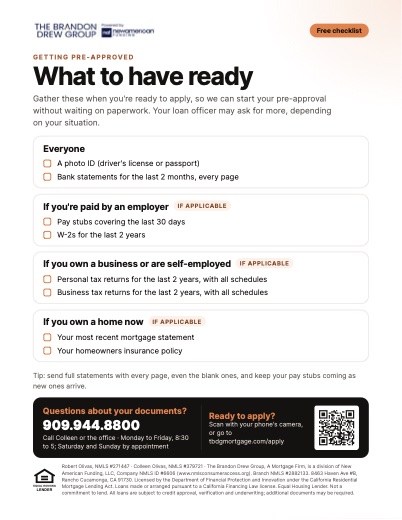 Free checklist · PDF · one pageWhat to have ready
The documents to gather when you're ready to apply, so we can start your pre-approval without waiting on paperwork.
Download the checklist
Questions buyers ask
What does CalHFA-approved lender mean?
It is CalHFA's own term for a lender the California Housing Finance Agency has approved to offer its loan programs. CalHFA's programs, including MyHome Assistance, are available only through such a lender. A mortgage broker works through a CalHFA-approved wholesale lender. Approval lets a lender offer the programs. It does not guarantee that you qualify, that funds are open, or how a lender will treat your file. You can confirm a lender's status on CalHFA's lender search.
How do I find a CalHFA-approved lender near me?
Start with CalHFA's own lender search and loan officer list on calhfa.ca.gov. Pick two or three names, then look each one up on NMLS Consumer Access to check licenses. Ask your real estate agent and people you trust who they would call. Then phone each lender and ask the same questions so you can compare them fairly. To reach our branch, call 909.944.8800.
Does it matter which CalHFA-approved lender I choose?
Yes. Every approved lender can offer the programs, but the experience can differ. Teams differ in how often they work these files, who handles yours, how clearly they explain the steps, and how they communicate. A CalHFA file has more steps than many standard loans, so a team that knows them can help you avoid missed deadlines. Ask each lender the questions in the table above and notice who answers plainly. Choose the person as well as the company.
Can I work with a lender that is not CalHFA-approved?
You can work with any licensed lender for other loan types. But CalHFA's own programs are available only through a CalHFA-approved lender. If you want MyHome Assistance or a CalPLUS loan, you need an approved lender, or a broker who works through an approved wholesale lender. Ask any lender up front whether they offer CalHFA programs and how you can confirm it. If they do not, they can still help you with other options.
Is Dream For All open, and does my lender matter?
Dream For All is closed to new applications. The 2026 portal closed March 16, 2026 (checked October 2026). CalHFA's May 20, 2026 note about the next round of vouchers is for people who already applied. If you were not selected, you can still work with a CalHFA-approved lender and look at other programs, such as MyHome Assistance or CalPLUS with ZIP. Your lender matters here, because a good one will lay out each option and its trade-offs, not only the program you heard about. Funds are limited and subject to availability.
→ Read: CalHFA Dream For All is closed. What are my options now?
How long will a CalHFA loan take to close?
We cannot promise a timeline, and you should be careful with any lender who does. It depends on your documents, the home, the appraisal, the seller and the program steps. CalHFA files include extra steps, such as homebuyer education and a reservation of program funds, which CalHFA says can be made after a sales contract is signed. Ask your lender for the steps in order, what usually slows a file, and what you can do to keep yours moving. Starting early, and sending documents quickly, helps.
What should I have ready before I call a lender?
Bring a rough idea of your household income, your savings, your monthly debts, and the area where you want to buy. You do not need perfect papers for a first call. It also helps to bring your list of questions. We will explain the programs, check the current limits, and tell you honestly what looks possible and what does not. If it is not the right time, we will say so and help you plan.
→ Read: How we work
How do I know a lender is honest about costs?
Ask for the costs in writing and ask them to explain each line. An honest lender will tell you which costs are set by others, such as the program, the appraiser or the title company, and which are theirs. CalHFA caps the lender processing fee on MyHome, and normal third-party fees are allowed. If an answer is vague, ask again. If it stays vague, that is useful information about how the rest of the process may go.
Sources14 sources · show all
Check each page directly. Program details change. All sources below checked October 28, 2026.
- California Housing Finance Agency (CalHFA), home page: https://www.calhfa.ca.gov
- CalHFA, approved lender search: https://www.calhfa.ca.gov/apps/approvedlenders
- CalHFA, "Find a Loan Officer": https://calhfa.ca.gov/homebuyer/lenders.htm
- CalHFA, MyHome Assistance Program sheet: https://www.calhfa.ca.gov/homeownership/programs/myhome.pdf
- CalHFA, homebuyer programs and education: https://cloud.calhfa.ca.gov/homebuyer/programs/myhome.htm
- CalHFA, reservations and rates information: https://www.calhfa.ca.gov/homeownership/rates/index.htm
- CalHFA, refinance and subordinate loans: https://www.calhfa.ca.gov/homeownership/programs/refi.htm
- CalHFA, Dream For All status: https://calhfa.ca.gov/dream/
- CalHFA, income limits: https://cloud.calhfa.ca.gov/homeownership/limits/income/income.pdf
- Consumer Financial Protection Bureau (CFPB), prequalification vs. preapproval: https://www.consumerfinance.gov/ask-cfpb/whats-the-difference-between-a-prequalification-letter-and-a-preapproval-letter-en-127/
- CFPB, loan options: https://www.consumerfinance.gov/owning-a-home/loan-options/
- myFICO, how mortgage inquiries are treated (shopping window): https://www.myfico.com/credit-education/credit-reports/how-long-do-hard-inquiries-stay-on-your-credit-report
- NMLS Consumer Access (look up any lender or loan officer): https://www.nmlsconsumeraccess.org
- U.S. Department of Housing and Urban Development (HUD), homebuying information: https://www.hud.gov
Disclosures
Colleen Olivas, NMLS #379721. Robert Olivas, NMLS #271447. The Brandon Drew Group, a division of New American Funding, LLC, Company NMLS ID #6606 (www.nmlsconsumeraccess.org). Branch NMLS #2882133. 8463 Haven Avenue, Suite B, Rancho Cucamonga, CA 91730.
Equal Housing Lender.
Licensed by the Department of Financial Protection and Innovation under the California Residential Mortgage Lending Act. Loans made or arranged pursuant to a California Financing Law license.
Down payment assistance programs have eligibility rules, funds are limited and subject to availability, and they are not available to everyone. Program terms, income limits, price limits and assistance amounts can change without notice. This is for information only. It is not a commitment to lend or a rate quote. Loans are subject to credit approval and underwriting. Not tax or legal advice. Examples are made up and for illustration only. For licensing information, visit www.nmlsconsumeraccess.org.